
Only a few days after three Romanian parties questioned the legitimacy of a law stating that minorities can use their mother tongue within the healthcare system, linguistic rights are under fire once again, as the Covasna County Prefect objected to the use of bilingual application forms for funding provided by the Covasna County Council.
For several years now, the County Council has provided bilingual (Romanian and Hungarian) forms for the applicants, which no-one objected to. So it is all the more incomprehensible why the Prefect’s Office suddenly deemed the recently adopted bilingual application forms for funding provided to non-governmental organizations, churches and sports associations, to be illegal. The Prefect argues that, according to the law, official forms in Hungarian should be available only for individuals, and that the law does not apply to legal entities.
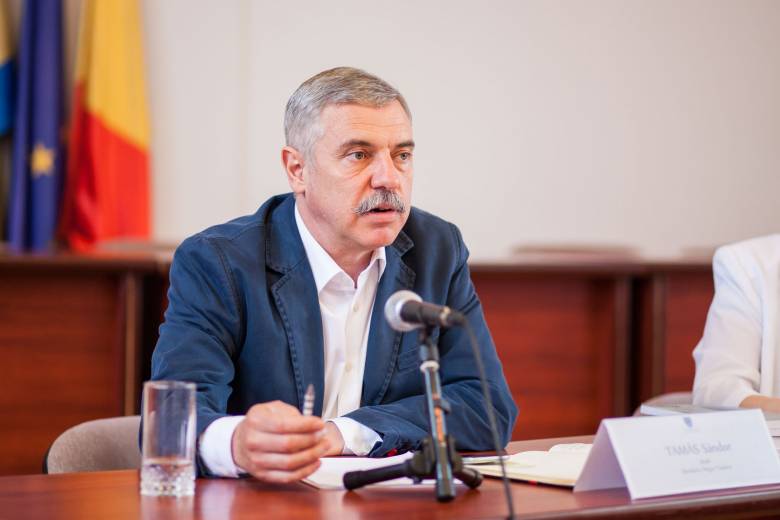
The County Council was put in the difficult position of having to choose between not obeying the Prefect’s will, who would then appeal the council resolution on the approval of the funding for about 600 projects, or complying with the decision and releasing the forms only in Romanian. They chose the latter so as not to endanger the application process and consequently the funding for the organizations. Nevertheless, Sándor TAMÁS, the president of the Covasna County Council, added that they would fight back and raise the issue at international forums, because this was a matter of principle. Later that week they also decided to translate the forms into Hungarian, in order to make it easier for Hungarian applicants to fill in the Romanian forms.
The council President underlined that they do not agree with the Prefect’s intent, and will continue to fight for the Hungarian people’s right to use their mother tongue in public institutions. “Our goal is to make Hungarian an official language in Szeklerland, alongside Romanian, and to make bilingual application forms, for instance, a common thing” – concluded TAMÁS.
We find it unacceptable that ten years after Romania ratified the European Charter for Regional or Minority Languages, instead of facilitating the use of their mother tongue for minorities, state institutions in Romania generally try to obstruct the use of minority languages.