
In recent days, we have witnessed several worrying incidents that clearly indicate that anti-Hungarian manifestations continue to be present in Romania, both in public life and in everyday interactions. We wish to draw attention to these cases because they clearly show that anti-Hungarian acts are not merely isolated incidents, but regularly occurring and serious social problems that, in the long term, undermine trust and coexistence between communities.
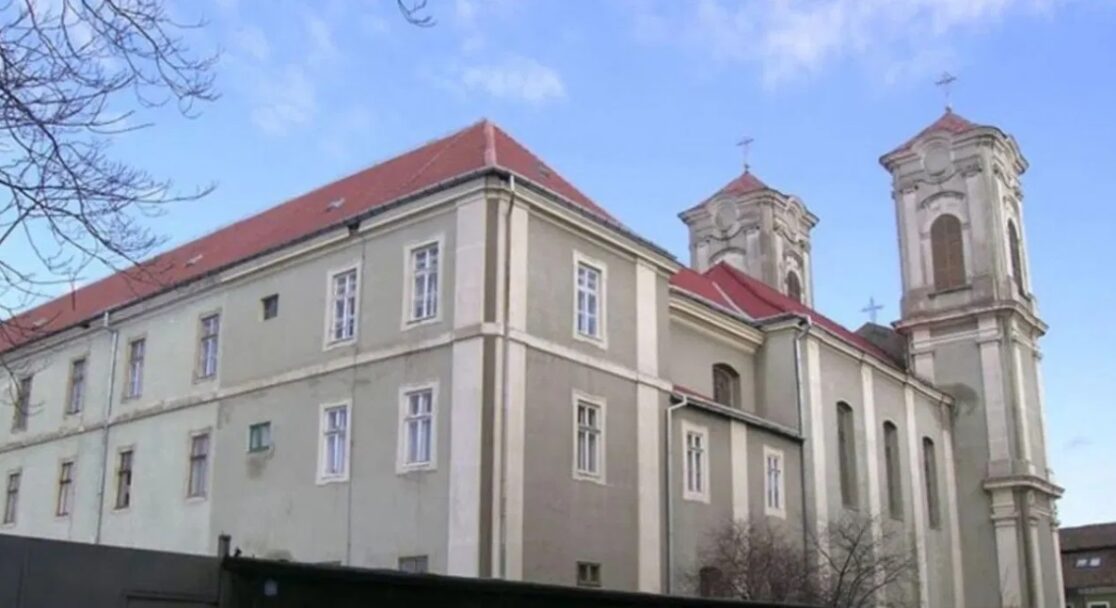
RULE OF LAW FAILURE AND INSTITUTIONAL ARBITRARINESS – The case of the eviction of the Premonstratensian abbot of Oradea
In Romania, the justice system and administrative practice have reached a point that can no longer be explained as normal legal dispute or a technical procedure. The case of the eviction of the Premonstratensian abbot of Oradea openly signals the erosion of rule-of-law guarantees and demonstrates that the institutional autonomy of a historic church community can be sacrificed at any time along political and economic interests.
The essence of the current situation is simple and grave: the head of a functioning religious order is being removed from his own monastery on the basis of a final court decision, even before constitutional, international, or ecclesiastical legal questions can be meaningfully examined. The speed of the procedure, the formal handling of legal remedies, and the insistence on enforcement all point to political intent.
The presence of the Premonstratensian Order in Oradea is not an administrative detail and not a matter of property use. It represents centuries of legal continuity, public service, educational and pastoral work that has survived the succession of empires, state forms, and political systems. Yet in a modern European state, this now offers no protection.
The authorities justify their actions by referring to a “project of public interest,” for the sake of which a functioning church community can be set aside. This reasoning, however, creates a dangerous precedent: the principle that, in the name of public interest, any autonomous institution — religious, civil, or minority — can be suspended, emptied, and later “redefined.”
Unfortunately, what once falls out of the actual use of a community rarely returns to its original function and rightful owner. Therefore, the narrative of a “temporary measure” in this case is not credible but cynical.
This case reaches far beyond Oradea. It sends the message that the rights of historic minority churches are not structural rights, but conditional concessions that can be withdrawn at any time if they become inconvenient. This runs counter to all European norms that treat church autonomy, the protection of cultural heritage, and legal certainty as fundamental values.
Record fine against the Hungarian community: the untenable practice prevailing in Romanian sport
Last week, a deeply concerning decision was made by the Romanian Football Federation: the unprecedented fine imposed on FK Csíkszereda is yet another example of pressure being exerted on the Hungarian minority within the framework of sport. Formally, the sanction is presented as disciplinary in nature; in reality, it carries a clear message: the public display of Hungarian community identity is seen as a disturbing factor.
The Hungarian and Székely symbols displayed in the stadium do not offend, incite, or provoke. Penalizing them does not serve the maintenance of order, but rather the exclusion of Hungarian presence from public spaces, even where such presence is historically and socially natural.
The scale of the fine is clearly disproportionate and creates a dangerous precedent: it conveys the message that the expression of national identity can be treated as a disciplinary offense. This is no longer sports regulation, but institutional discrimination.
The case of FK Csíkszereda goes far beyond football. It is about whether we allow sport to become a tool of hatred and intimidation. We believe that identity is not a crime, the use of symbols is not a provocation, and this cannot be silenced through punishment.
Erika Benkő, director of the Mikó Imre Legal Protection Service, stated: “Unfortunately, the issue of using Hungarian symbols encounters such a level of resistance from both Romanian society and the authorities that, in my opinion, this situation can only be resolved if the use of symbols by national communities becomes clearly regulated by law.”